
Long-Dated U.S. Treasuries Hit Multi-Decade High Yields
29 sept 2026
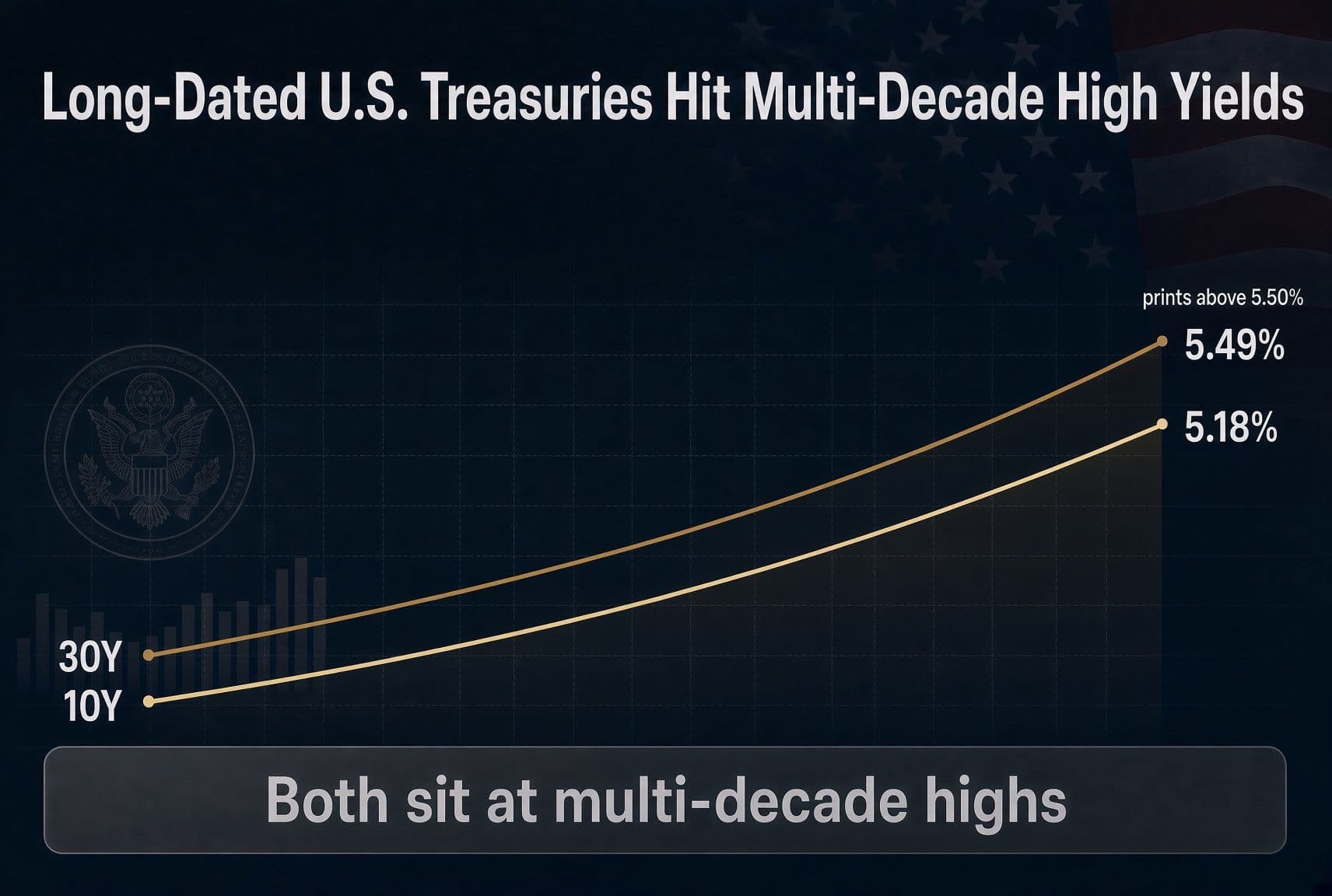
Long-dated U.S. government bond yields are elevated: the 10-year is trading around 5.17%–5.18%, while the 30-year is around 5.47%–5.49%, with intra-period prints above 5.5%. Both sit at multi-decade highs.
The 10-year has reached its highest level since 2007, the 30-year is at its highest since 2004. This is not a fleeting spike. The rise has been sustained over recent weeks and months and reflects tighter policy expectations, inflation that has not fully faded (energy costs included), continued economic resilience, and market concern over the scale of public borrowing.
What these levels mean
The 10-year yield is the main benchmark for mortgages, medium-term corporate borrowing, and asset valuation. The 30-year better captures the term premium and longer-term views on inflation, growth, and fiscal sustainability.
The curve is currently positively sloped, but elevated long-term rates raise financing costs across the economy. 30-year mortgage rates are already around 7%. The federal government’s debt-service costs are also rising materially as existing debt is refinanced at higher rates.
Consequences for the economy
1 -Tighter financial conditions and slower growth
Higher long-term rates act as a brake. Models suggest that a 10-year yield around 5% can already reduce GDP growth by about 0.4 percentage points over a one-year horizon. Levels near 5.5% increase that drag. Business investment (especially in capital-intensive sectors) and the housing market are among the first to feel it.
2 - Housing market and consumption
Mortgages at 7% reduce housing affordability, slow transactions, and put pressure on home prices. Households with floating-rate debt or those who need to refinance feel the impact on disposable income, which can weigh on consumption.
3 - Cost of public debt
The U.S. government faces a structural rise in interest expense. If rates remain at these levels, debt service becomes an increasingly heavy budget item, competing with other spending and worsening the medium-term debt-sustainability profile.
4 - Companies and capital markets
Corporate funding costs rise. Firms with high leverage or a need to refinance medium- and long-term debt face greater pressure. At the same time, the economy has shown resilience (corporate profits and AI-related investment), which so far has prevented a sharper adjustment in equity markets.
5 - Inflation and Fed policy
Part of the rise in long yields reflects the view that inflation may take longer to return to 2% and that the Fed may need to keep policy relatively restrictive for longer. That creates the risk of a “stagflation-lite” scenario: growth below potential, a modest rise in unemployment, and inflation still above target.
Balanced reading
These yield levels are not, by themselves, a crisis signal. They are consistent with an economy that is still growing, large deficits, and a higher fiscal risk premium than in the ultra-low-rate period. The danger lies in persistence: if 10-year and 30-year yields stay above 5%–5.5% for several quarters, the cumulative effect on investment, housing, and consumption is likely to show up as weaker growth in 2027.
The key watchpoint is whether markets start pricing a higher ceiling (for example, the 10-year testing 5.5%–6%) without inflation easing or growth slowing visibly. In that case, the tightening of financial conditions would stop being gradual and become more disruptive.